
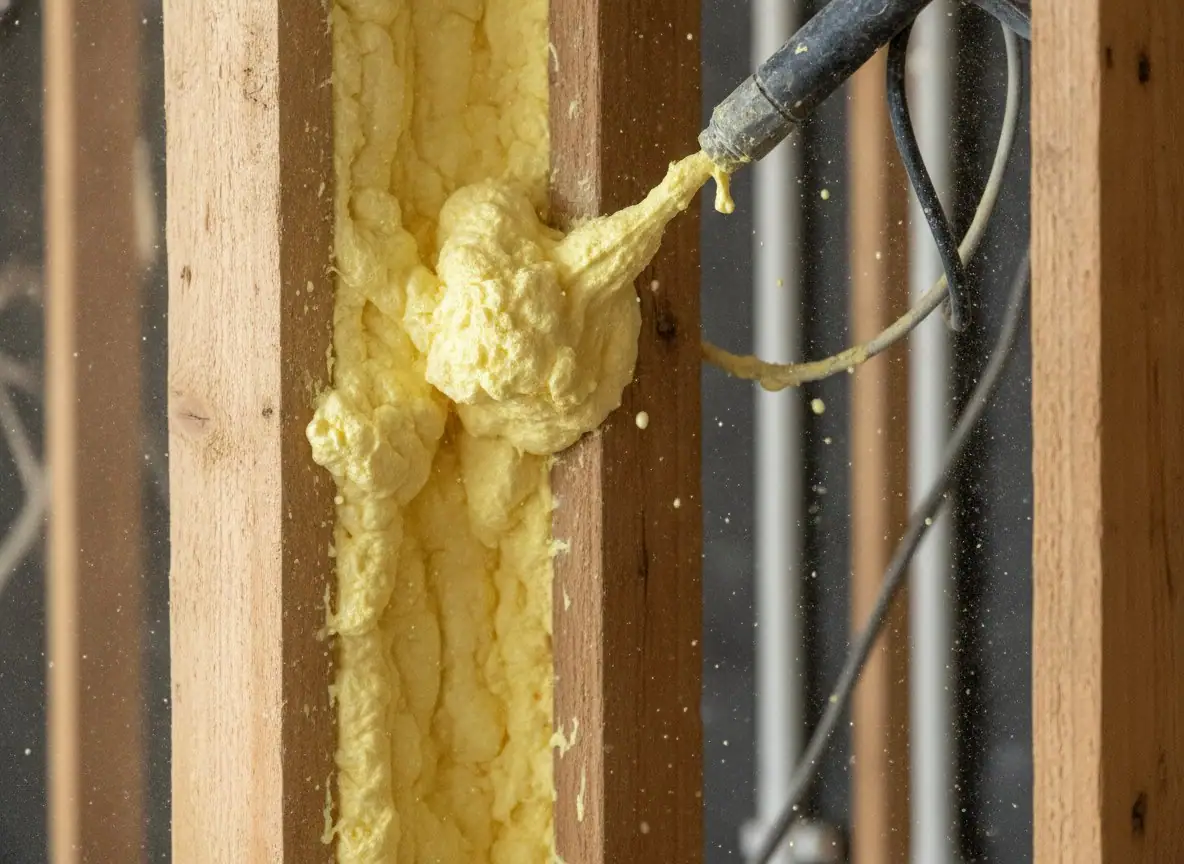
Spray Foam Insulation Cost in Cypress, CA
Spray foam insulation cost in Cypress depends on five things: which foam you choose, how thick it goes on, how much area it covers, how easy the space is to reach, and how much prep or old-material removal comes first. This page explains each factor, compares spray foam with fiberglass and cellulose, and walks through attic, garage and metal building examples. That way you can read a written quote with confidence.
Clean Air Insulation has installed and removed insulation in Cypress and nearby Orange County and southeast Los Angeles County communities since 2005. We do not publish flat prices, because two houses on the same street can need very different work. We give every homeowner and business a written quote after a free inspection.
At a glance
How much does spray foam insulation cost per square foot?
Spray foam insulation cost per square foot is set by the foam type and thickness, so there is no single per-square-foot number that fits every job. Installers usually price foam by the board foot, which is one square foot of foam one inch thick. A 1,000 sq ft attic roof deck sprayed 5.5 inches deep is 5,500 board feet. The same deck sprayed 3 inches deep is 3,000 board feet.
That is why spray foam cost per square foot changes with R-value targets. Open-cell foam typically delivers around R-3.5 to R-3.8 per inch. Closed-cell foam typically delivers around R-6 to R-7 per inch. Closed-cell uses more material per board foot, so it usually carries a higher price per inch. Because it needs fewer inches to reach the same R-value, the gap per square foot can be smaller than it first appears.
| Comparison point | Open-cell spray foam | Closed-cell spray foam |
|---|---|---|
| Typical R-value per inch | About R-3.5 to R-3.8 | About R-6 to R-7 |
| Density | Light and soft (about 0.5 lb/ft³) | Rigid (about 2 lb/ft³) |
| Relative material cost per board foot | Lower | Higher |
| Inches needed for a given R-value | More | Fewer |
| Moisture behavior | Vapor-permeable | Acts as a vapor retarder at about 1.5 to 2 inches |
| Common uses | Attic roof decks, interior walls, sound control | Metal buildings, crawl spaces, rim joists, areas exposed to moisture |
You can learn more about each material on our open cell spray foam and closed cell spray foam pages. Board feet are only the starting point, though. Several site conditions move the final price up or down.
At a glance
What factors affect spray foam insulation cost in Cypress, CA?
The biggest factors are foam type, thickness, total area, access and prep work. Permits and any required coatings also add to the total. The table below shows how each one affects a spray foam insulation estimate.
| Cost factor | What we look at | How it moves the price |
|---|---|---|
| Foam type | Open-cell or closed-cell, chosen for moisture and structural needs | Closed-cell costs more per board foot |
| Thickness / R-value | Target R-value for the space and California Title 24 energy code requirements | More inches means more board feet |
| Area | Square footage of roof deck, walls, floors or ceilings | Larger areas raise the total but can lower the per-unit cost |
| Access | Low roof pitch, tight attic crawl space, ductwork, ladders or lifts needed | Hard-to-reach areas take more labor time |
| Prep and removal | Old batts or blown-in material, rodent droppings, debris, masking | Tear-off and cleaning add labor and disposal |
| Ignition or thermal barrier | Code-required coatings or coverings in occupied or storage spaces | Adds material and a separate application step |
| Permits and inspection | City permit requirements for the scope of work | Adds fees and scheduling |
| Damage extent | Roof leaks, rotted sheathing, pest damage found during inspection | Repairs must be done before foam goes on |
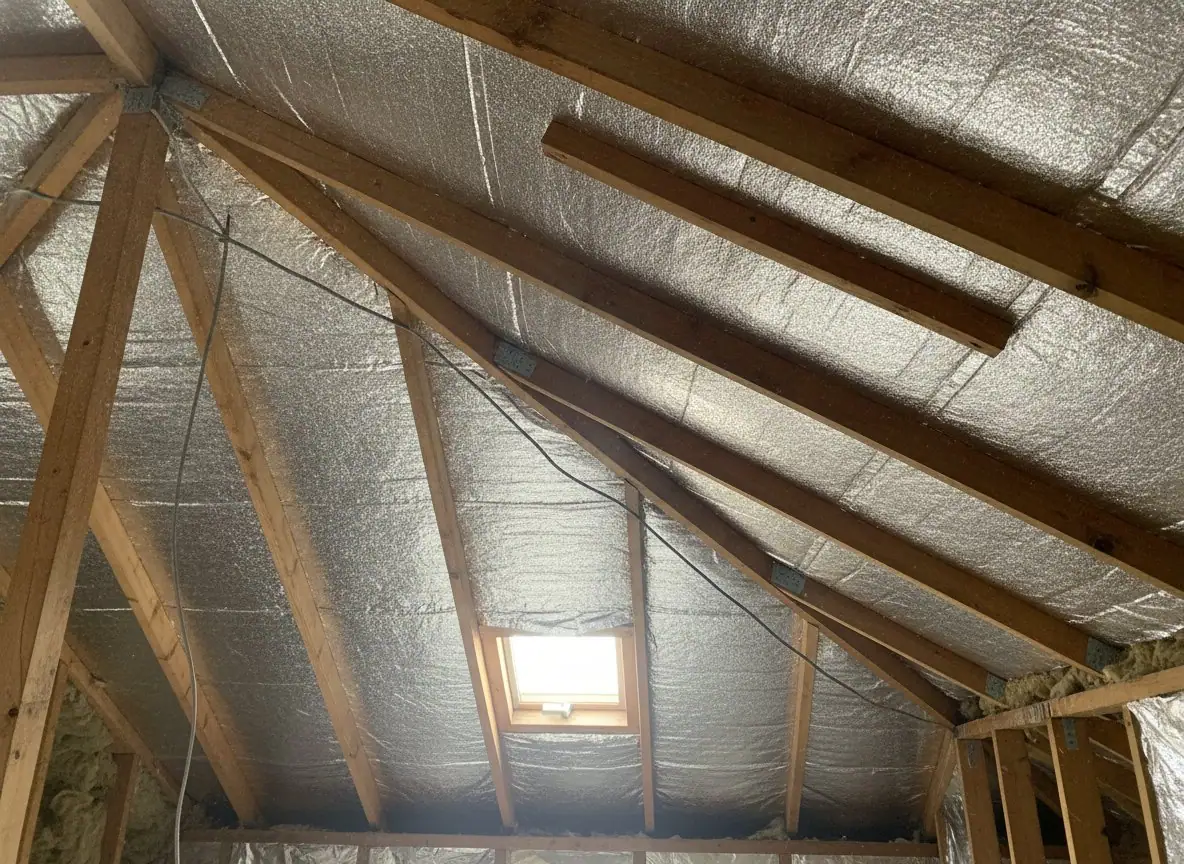
Many Cypress homes have HVAC ducts running through the attic, which affects both access and design. Spraying the underside of the roof deck brings those ducts inside the insulated space. Most homeowners first look at this kind of attic project, so we start there.
Free, no-obligation estimates
Talk to Clean Air Insulation
Tell us what you need and we’ll take it from there.
How much does it cost to spray foam attic insulation?
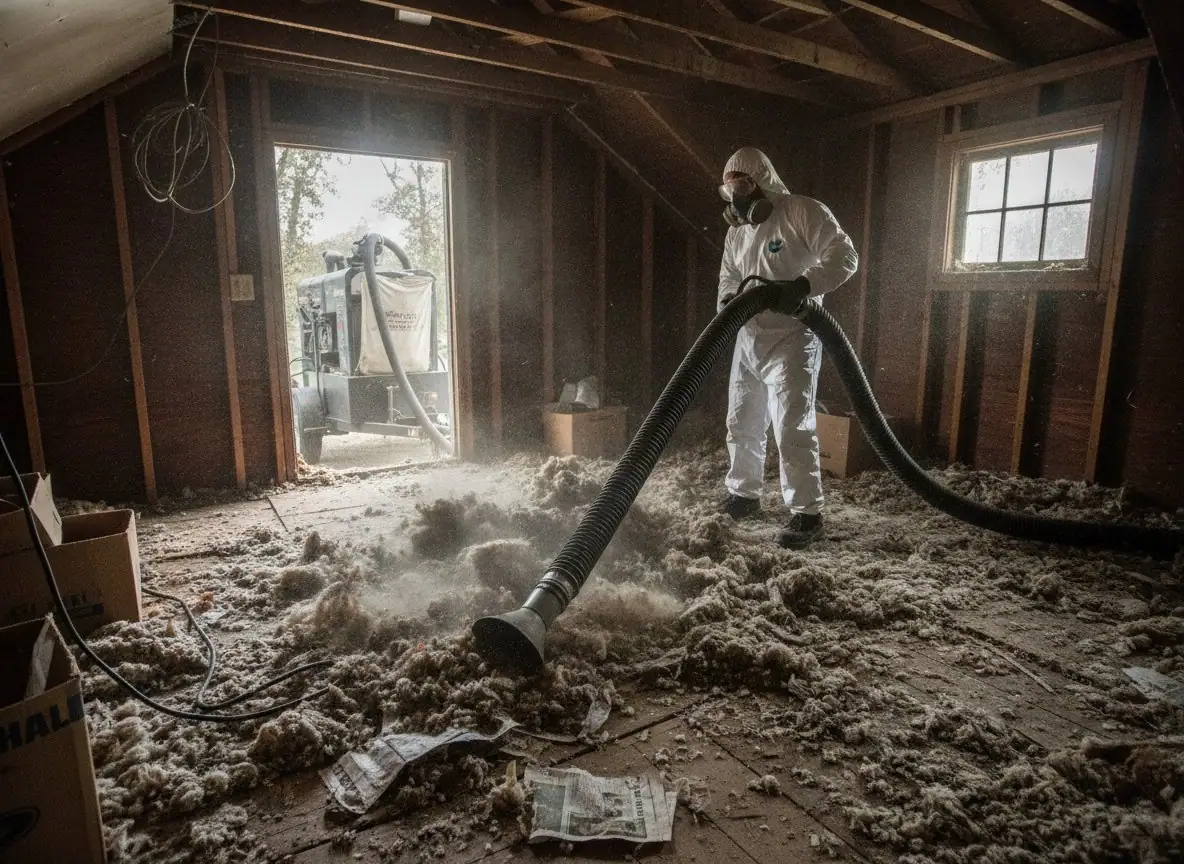
The cost to spray foam an attic depends on whether foam goes on the roof deck or the attic floor, and on how much old insulation has to come out first. Attic foam insulation cost is often driven more by prep than by the foam itself.
Worked example: attic roof deck
- Measure the roof deck, not the floor. A 1,500 sq ft single-story home with a 5/12 roof pitch has more sloped surface than floor area. As a rough guide, multiply floor area by a pitch factor (about 1.08 for 5/12), then add gable end walls.
- Set the thickness. Example: 5.5 inches of open-cell foam.
- Calculate board feet. Roof deck sq ft × 5.5 = total board feet.
- Add prep. Removal of old fiberglass or cellulose, attic cleaning, and sealing vents if the attic is converted to unvented.
- Apply rates from your written quote. Board feet × [quoted foam rate] + [removal and cleaning line item] + [barrier coating, if required] + [permit, if required] = attic spray insulation cost.
Read moreShow less
If your attic has droppings or nesting, that cleanup has to happen before any foam is sprayed. We handle insulation removal in Cypress and rodent-proofing as part of the same project. For a side-by-side look at other attic options, see our attic insulation cost guide. Garages raise a different set of questions, starting with the door.
How much does it cost to spray foam a 20x20 garage?
A 20x20 garage costs more or less depending on whether you insulate the walls, the ceiling, the garage door, or all three. Finished drywall also matters, because foam can only be sprayed into open framing.
Worked example: 20x20 detached garage, 8-foot walls
- Walls: 80 ft perimeter × 8 ft = 640 sq ft, minus about 112 sq ft for a 16x7 door, so roughly 528 sq ft.
- Ceiling or roof deck: 400 sq ft flat ceiling, or more if spraying a pitched roof deck.
- Thickness: Example: 3.5 inches in 2x4 walls. At 3.5 inches the walls are about 1,850 board feet. The ceiling depth is set by your target R-value.
- Formula: (wall board feet + ceiling board feet) × [quoted rate] + [thermal barrier] + [garage door insulation, if added].
Read moreShow less
Garage walls shared with living space and garages used as workshops often need an ignition or thermal barrier over the foam. Your quote should list that as a separate line. Metal buildings follow the same math but use larger surfaces and nearly always closed-cell foam.
At a glance
How much to spray a 30x50 metal building with closed-cell foam?
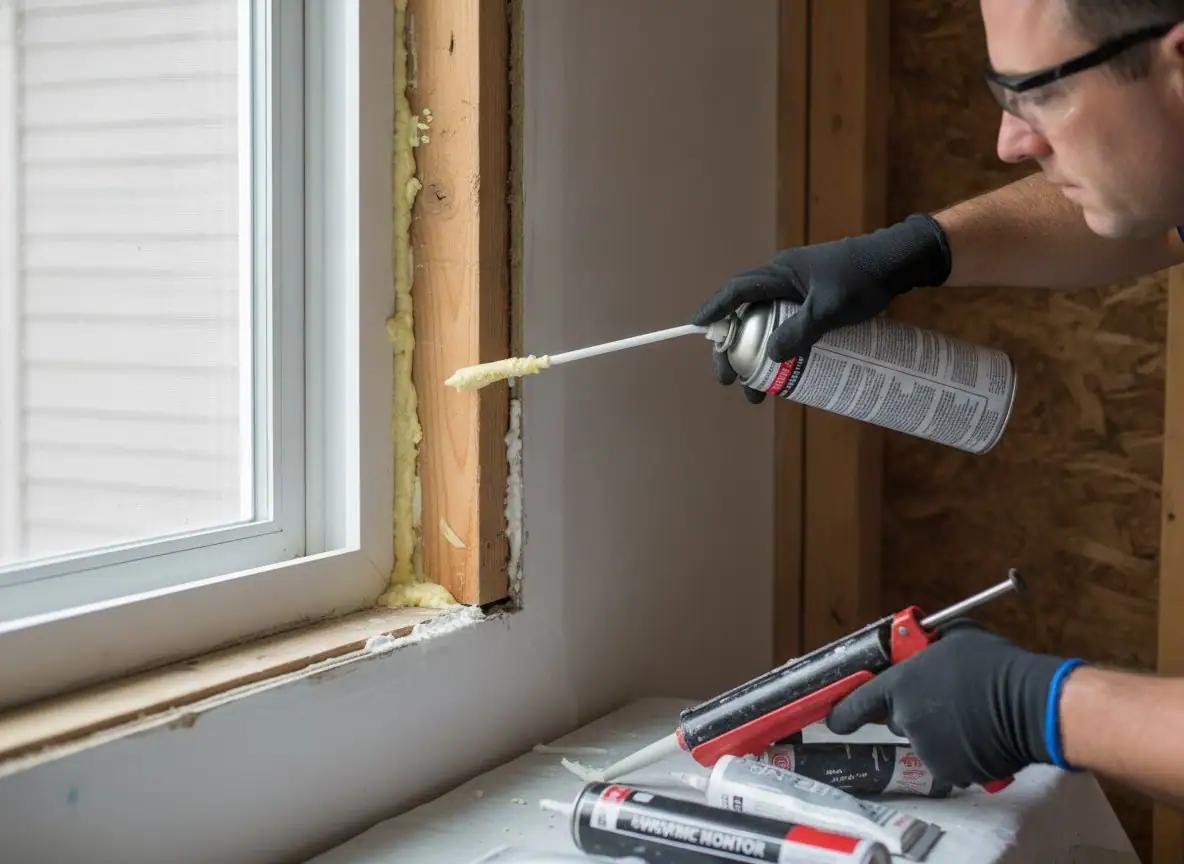
Metal building spray foam insulation cost depends on eave height, roof pitch and how many inches of closed-cell foam are applied. Closed-cell is the usual choice because it bonds to steel and helps control condensation.
Worked example: 30x50 building, 12-foot eave height
| Surface | Calculation | Approximate area |
|---|---|---|
| Walls | 160 ft perimeter × 12 ft | 1,920 sq ft, minus doors and windows |
| Roof | 30 × 50 × pitch factor | About 1,500 to 1,600 sq ft for a low pitch |
| Gable ends | Triangle area above eave on each end | Varies with pitch |
At 2 inches of closed-cell foam, about 3,400 sq ft of surface comes to roughly 6,800 board feet. Your closed cell spray foam cost is that number times [quoted rate], plus lift rental if the eaves are high, masking of equipment, and any required coating. Seeing these numbers next to other insulation types helps answer the obvious next question.
At a glance
Is it cheaper to spray foam or install insulation?
Fiberglass and cellulose are almost always cheaper to install than spray foam. Spray foam, however, seals air leaks that batts and loose-fill do not, so the comparison depends on what problem you are solving.
| Factor | Spray foam | Fiberglass (batt or blown) | Cellulose (blown) |
|---|---|---|---|
| Upfront cost | Highest | Lowest to moderate | Low to moderate |
| Typical R-value per inch | About R-3.5 to R-7 | About R-2.5 to R-4 | About R-3.2 to R-3.8 |
| Air sealing | Built in | Needs separate air sealing | Partial; needs separate air sealing |
| Moisture resistance | Closed-cell is strong | Loses performance when wet | Absorbs moisture |
| Ease of later removal | Difficult | Easy | Moderate (vacuum removal) |
| Best fit | Roof decks, metal buildings, crawl spaces | Attic floors, open walls on a budget | Attic floors, dense-pack walls |
If budget is the main concern, compare our blown-in insulation cost page and our fiberglass and cellulose material guides. A lower price is only part of the decision, so it helps to know the downsides of foam too.
At a glance
What is the downside of spray foam insulation?
The main downsides are the higher upfront cost, the need for careful installation, and the difficulty of removing it later. Each of these is manageable when the job is planned correctly.
Pros and cons of spray foam
| Pros | Cons |
|---|---|
| High R-value per inch, especially closed-cell | Higher spray foam insulation price than batts or loose-fill |
| Seals air leaks in the same step | Poor mixing or wrong temperatures can cause odor and poor curing |
| Brings attic ductwork inside the conditioned space | Occupants usually leave the home during spraying and initial curing |
| Closed-cell resists moisture and adds rigidity | Hard and costly to remove if problems show up |
| Reduces outside noise, especially open-cell | Can hide roof leaks on the deck underside |
| Fills irregular cavities completely | May need ignition or thermal barriers to meet code |
Those last few cons are exactly why some homeowners end up paying to take foam out.
Why are people removing spray foam insulation?
People usually remove spray foam because it was installed poorly, because it is trapping moisture or hiding roof leaks, or because it is causing problems during a home sale.
- Odor or off-ratio foam: If the two chemical components were not mixed correctly, the foam may not cure fully and can leave a lasting smell.
- Moisture and roof concerns: Foam applied to a roof deck can make leaks hard to spot until sheathing is damaged.
- Home sales: Some inspectors and buyers flag foam because it blocks inspection of the roof deck.
- Pest damage: Rodents can tunnel into foam, and the material may need to be cut out during cleanup.
- Remodeling: Foam has to be cut away to reroute wiring, plumbing or ducts.
We remove failed foam and other insulation, repair what we find, and can help homeowners with insurance claims when covered damage is involved. Our crew also offers 24/7 emergency service for rodent problems. With both the benefits and the risks laid out, the real question is whether foam pays off for your building.
Is spray foam worth the cost?
Spray foam is usually worth the cost when air leakage, ducts in the attic, moisture or a metal structure are the main problems. It is often not worth it when a simple attic floor top-off would solve the issue.
- Usually worth it: attics with ductwork and air handlers, metal buildings, crawl spaces, rim joists, and rooms that stay hot or cold despite existing insulation.
- Often not worth it: a vented attic with an easy-to-reach floor and no ducts, where blown-in material reaches the target R-value for less.
- Depends: walls during a remodel, where foam adds air sealing but batts may meet code at lower cost.
Cypress has mild coastal winters and warm summers. Attic heat gain around ducts is often the deciding factor here. If foam is the right fit but the upfront cost is a hurdle, financing can help.
Can I finance spray foam insulation?
Yes. Clean Air Insulation offers financing for qualifying insulation projects, including spray foam. Ask about financing during your free inspection, and we will explain the options available for your project along with your written quote. That way you can compare paying upfront with spreading the cost over time before you commit. Whichever way you pay, it all starts with an accurate estimate.
How do I get an exact spray foam estimate?
The only way to get an exact spray foam estimate is an on-site inspection that measures the space and checks conditions. We offer that inspection free of charge.
- Request a visit: call (714) 459-5485 or use our free estimate form.
- Inspection: we measure surfaces and check access, existing insulation, ducts, moisture, roof condition and signs of pests.
- Recommendation: we explain the right foam type and thickness, or tell you if another material makes more sense.
- Written quote: you receive itemized pricing covering foam, prep, removal, barriers and permits as they apply.
We serve Cypress, Los Alamitos, Buena Park, Garden Grove, Huntington Beach, Cerritos, La Palma and nearby cities. Learn more about our spray foam insulation in Cypress service, or browse our full insulation cost guide for Cypress. Below are answers to the questions we hear most often.
FAQ
Frequently asked questions
Is open-cell cheaper than closed-cell spray foam?
Yes. Open-cell usually costs less per board foot. Closed-cell needs fewer inches to reach the same R-value, so compare quotes by total R-value and square footage, not by inches alone.
Does spray foam lower energy bills?
It can, mainly by stopping air leaks and keeping attic ductwork out of extreme heat. Actual savings depend on your home's current insulation, air leakage, HVAC system and usage habits.
Does spray foam insulation add to home value?
Better comfort and efficiency can appeal to buyers, but some inspectors flag roof-deck foam because it hides the sheathing. A clean, code-compliant installation with documentation helps avoid that concern.
What does a spray foam estimate include?
Our written quote follows a free inspection. It lists the foam type, thickness, area covered, prep and removal work, any required barrier coating, and permits when they apply.
Can spray foam be installed over old insulation?
Foam must bond to a clean surface, so it is not sprayed over existing batts or loose-fill. When foam goes on the roof deck, old attic floor insulation is often removed, especially if it is dirty or contaminated by rodents.
Ready to see what your project will actually cost? Call Clean Air Insulation at (714) 459-5485 or fill out our free estimate form to schedule your free inspection in Cypress.
Why choose us
Why choose Clean Air Insulation?
Free estimates
Get a clear, no-obligation estimate before any work begins.
Licensed & insured
Your property and our crew are protected on every project.
Residential & commercial
One team for homes, multi-family and commercial properties.
Locally owned & operated
A local team serving your community and the surrounding area.
Get in touch
Find insulation help near you
Request a free estimate online or give us a call — our team will follow up quickly.
- Call us(714) 459-5485
- Visit6100 Chip Ave, Cypress, CA 90630
- HoursMon-Sun 07:00-19:00